

Why Does Chandler Tap Water Leave White Spots on Everything?
If your shower glass turns cloudy, faucets develop a chalky ring, or clean dishes dry with white spots, you're probably seeing the everyday effects of hard water.
Those white spots are usually not leftover soap. They're mineral deposits left behind after hard water dries.
Water naturally carries dissolved minerals. When water contains a higher concentration of hardness minerals, those minerals can remain behind on glass, fixtures, sinks, countertops, dishes, and other surfaces after the water itself evaporates.
That's why you can clean a shower door in the morning and notice spotting again after the next few showers. The problem is not necessarily how you're cleaning. It's what is dissolved in the water reaching the fixture.
Why Does Hard Water Leave White Residue?
Hard water contains dissolved minerals, particularly calcium and magnesium. Water disappears when it dries, but those minerals do not. They remain on the surface and can gradually form the white, chalky buildup commonly called scale or limescale.
Your Fixtures Usually Tell the Story First
Hard water tends to become obvious in places where water repeatedly splashes, sprays, heats, or evaporates.
Shower Glass
Mineral deposits can leave a cloudy film or visible water spots that return quickly after cleaning.
Faucets & Fixtures
White crust can collect around faucet bases, aerators, handles, shower heads, and other places where water regularly dries.
Sinks & Countertops
Repeated splashing can leave mineral rings and spotting around sinks even when the area is wiped down frequently.
Dishes & Glassware
Clear glasses and dark dishes tend to make white mineral spotting especially easy to see.
Shower Heads
Mineral buildup can collect around spray openings and gradually affect how evenly water flows.
Water-Using Appliances
The same minerals you see on the outside of fixtures can also move through equipment that heats or uses water.
Hard Water Doesn't Only Show Up on Shower Glass
The visible spotting around the home is what most people notice first. But hardness minerals are also moving through faucets, valves, shower heads, appliances, and the water heater.
Anywhere water is repeatedly heated or allowed to evaporate can become a place where mineral scale accumulates over time.
This is why hard water deserves attention before the buildup becomes severe.
Scale may collect around fixture openings, aerators, valves, and heating surfaces. It can also make homeowners spend more time cleaning the same surfaces over and over again.
If you're already seeing obvious white deposits throughout the house, it may be worth looking at the water itself instead of continuing to fight the symptoms room by room.
Want a deeper look at the issue? Read What Is Hard Water Costing Your Home? for more information about how mineral-heavy water can affect fixtures, appliances, and everyday household maintenance.
Water Softening and Water Filtration Are Not the Same Thing
This is one of the most important distinctions for homeowners considering water treatment. Different systems are designed to solve different problems.
Water Softening / Conditioning
If your biggest frustration is hard-water scale, white spots, mineral buildup, or the way hardness affects fixtures and household cleaning, a water softening or conditioning solution may be the conversation to have.
- Targets hard-water concerns
- Helps reduce mineral scale problems
- Can make fixtures and glass easier to maintain
- Supports homes experiencing obvious hardness buildup
Whole-Home Water Filtration
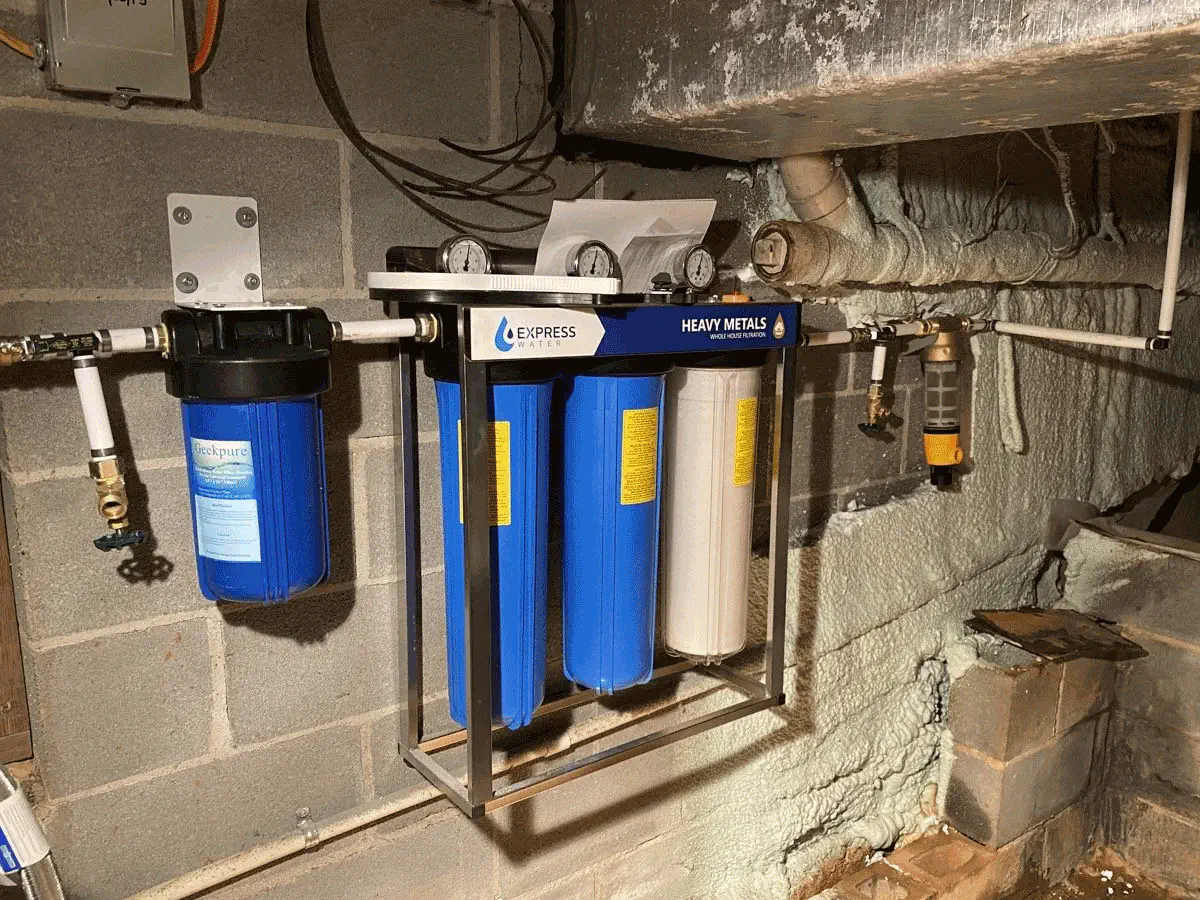
Filtration has a different job. A whole-home filtration system is designed to address substances in the incoming water based on the filtration media and system selected.
- Addresses water-quality concerns beyond hardness
- Can target sediment and other unwanted substances
- Treats water before it reaches taps throughout the home
- Can be combined with other treatment when appropriate
Chandler Plumbing offers multiple water treatment options , so homeowners do not have to guess which equipment they need based on a generic advertisement.
What Are You Actually Trying to Improve?
The best water-treatment system is the one that addresses the problem you're actually experiencing.
That's why Chandler Plumbing looks at the home's water and the homeowner's priorities instead of assuming every household needs the exact same equipment.
Heating Hard Water Can Make Mineral Buildup More Noticeable
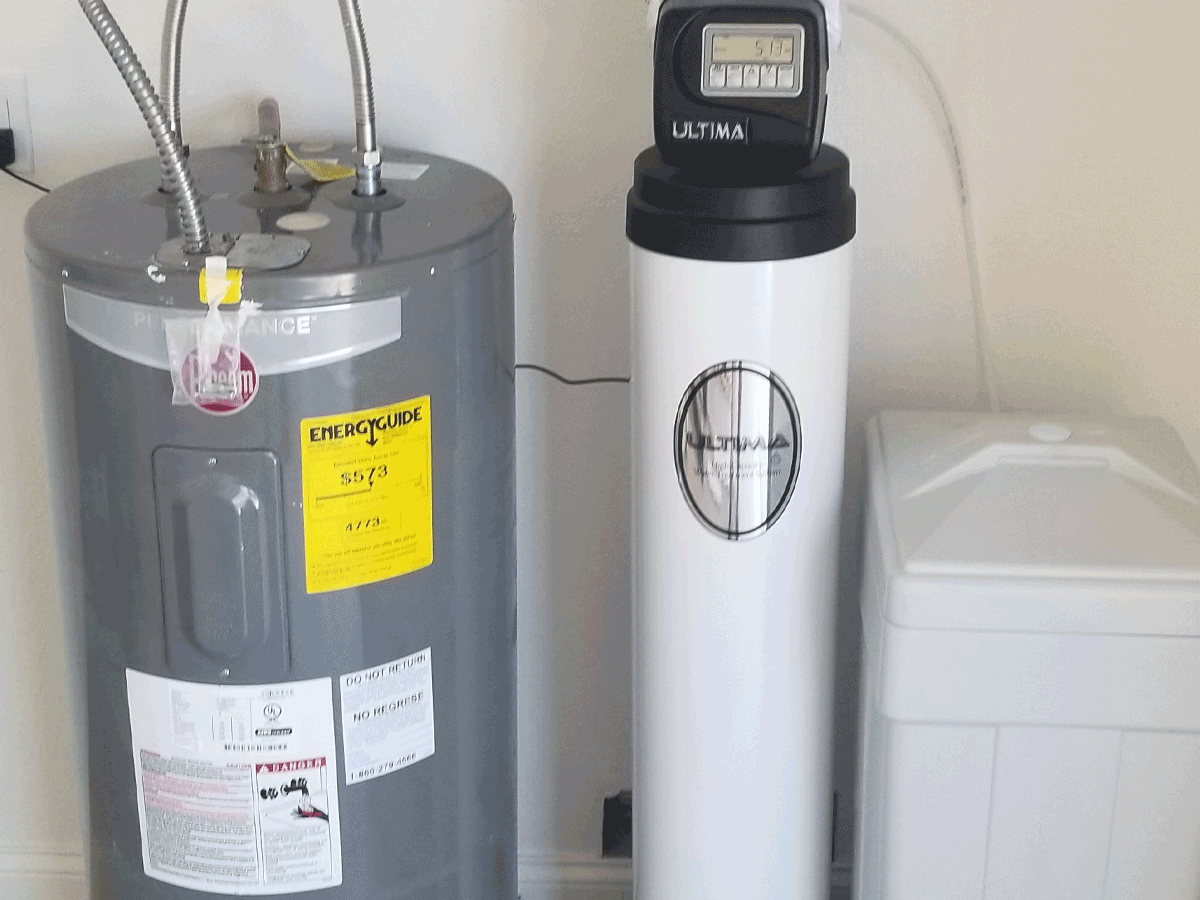
Your water heater handles a large amount of water over its service life. When mineral-heavy water is repeatedly heated, sediment and scale can collect inside tank-style systems and around water-heating components.
If your water heater is making unusual noises, producing less hot water than it used to, leaking, or showing its age, the water itself may be only one part of the conversation.
Chandler Plumbing provides water heater repair, maintenance, and replacement along with whole-home water treatment. That makes it possible to look at both the equipment and the water moving through it.
If You've Been Thinking About Better Water, August Is a Good Time to Do Something About It
White spots do not disappear because you buy another bottle of glass cleaner. If hard water is showing up throughout your home, this may be the right time to treat the source instead of repeatedly cleaning the evidence.
Chandler Plumbing can look at what's happening with your water, talk through what you actually want to improve, and recommend a treatment package that fits the home.
Find Out What's Actually Happening With Your Water
If mineral buildup is showing up on faucets, shower glass, fixtures, and dishes throughout your Chandler home, Chandler Plumbing can help you determine whether water softening, filtration, reverse osmosis, or another treatment approach makes sense.
You don't have to choose equipment before you call. Start with the problem you're seeing. We'll help you work through the options.